


Peter Granville’s career in education policy has taught him the critical impact of the middle school years on a student’s trajectory. “Often what you’re trying to do in policy at a higher education level is remedy gaps for students that enter long before college. I’m reminded of how important it is to set up our youngest learners for success,” affirms Peter.
Peter’s passion for student success led him to mentoring at Higher Achievement. “What drew me was that it was a proven model of improving student outcomes. Higher Achievement puts a lot of work into confirming that their model leads to long-term positive outcomes. I could trust that I was investing my time well,” Peter explains.
That trust is well-placed. Higher Achievement has been the subject of two randomized controlled trial studies, both demonstrating a statistically significant effect in academics. Only 2% of nonprofit organizations have undergone RCTs, and, of those, only 10% have positive results. The impact is clear: 95% of Higher Achievement scholars graduate from high school on time, and they are three times more likely than their peers to graduate from a four-year college within six years.
For Peter, it’s more than just the numbers. Working with sixth graders and building community has been especially meaningful. “Scholars at this age are learning about themselves in deep ways. They’re exploring their futures and forming new friendships during a very impactful time. I’m grateful that Higher Achievement creates a space for me to be a mentor to them during this time.”
Every week throughout the school year, Peter meets with his three scholars to offer encouragement and guidance as they navigate their middle school years. “I’ve tried to think of mentoring sessions as an opportunity to build on what they’re already interested in while incorporating lessons that will help shape their future,” says Peter. A recent session on community did just that. “They like art, so I encouraged them to draw different representations of their communities. It helped them express themselves and reflect on their surroundings in a new way.”
Through Higher Achievement’s mentoring curriculum, Peter facilitates conversations with his scholars about high school, challenges at school, and their goals for the future. Part of the curriculum focuses on self-expression that empowers scholars to build skills in presentation and public speaking. “In December, my scholars shared an art project in front of their peers but sat down as quickly as they could. They weren’t interested in public speaking yet,” Peter recalls. “Now, we’re preparing for another speaking opportunity, and my goal is to extend their time in front of an audience, even just to five minutes.” This skill-building approach not only prepares scholars for future academic and professional settings but also nurtures self-confidence in the present.
Peter and his mentees have formed a bond built on commitment, trust, and intentionality. “My scholars came in with very distinct personalities. At first, it was three individuals bouncing off of each other. Now, it’s a more cohesive group. They’re co-existing better. The group dynamic now reflects all our personalities. When they’ve had issues with each other, I can tell they feel comfortable coming to me to help resolve them. That signals a type of trust I really appreciate. Seeing how they’ve welcomed me into their social group has been incredibly rewarding.”
This evolution is a testament to Higher Achievement’s ability to foster belonging—something scholars deeply feel. A remarkable 90% of scholars report a strong sense of belonging at Higher Achievement, with 85% expressing confidence in their self-efficacy.
Beyond working with scholars, Peter has found immense value in the Higher Achievement mentorship community. “The other mentors have been wonderful to work with. When there have been absences, we’ve merged groups, which has given me a chance to learn from different mentoring styles. Other mentors have taken me under their wing, and they’ve been a great asset.”
Mentoring at Higher Achievement is not just about academic success—it’s about fostering a lifelong sense of belonging, self-confidence, and readiness for the future. Mentors like Peter make a lasting impact in the lives of scholars and our community.
“I want them to enjoy our sessions. That means planning activities around what they love, helping them express themselves, and building a foundation of trust. That’s what mentoring at Higher Achievement is all about.”
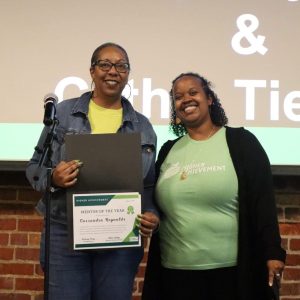
In 2011, Cassandra “Sandy” Reynolds was looking for a meaningful volunteer opportunity in her community, and she found a perfect fit as a mentor at the newly launched Richmond affiliate of Higher Achievement. Fifteen years later, Ms. Sandy remains one of Richmond’s longest-serving mentors, and her commitment to supporting scholars through the formative middle school years has impacted hundreds of lives. Over the years, Ms. Sandy has worn many hats. She […]

From scholar to mentor, community has guided every step of Jordan Dowtin-Dorsey’s path. “My time at Higher Achievement is my earliest memory of building a community outside of my family. That experience changed my trajectory in life in so many ways.” At first, the commitment to Higher Achievement seemed daunting. “It was a big adjustment for […]
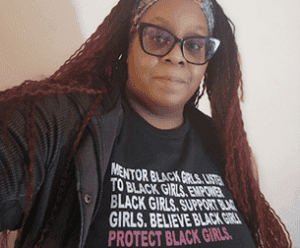
I believe having a mentor provides valuable guidance, offering direction and support. Young people benefit greatly from positive role models. As a mentor at Higher Achievement, I have been fortunate enough to offer support and guidance on their middle school journey. Showing young people that they are valued and heard is important to me. I […]
After living in DC for 12 years, Kirstin Hall sought a new way to connect to her community. “I live in and love this city, and I wanted to give back.” She explored several volunteer opportunities, from joining a neighborhood revitalization club to delivering food to the elderly. Then, one afternoon, she stumbled across DC […]

Relationships are at the heart of Higher Achievement’s impact. During weekly mentoring sessions, scholars and mentors form a connection built on trust, encouragement, and support. For 8th-grade scholar Jada and her mentor Ms. Apara, mentoring has been an opportunity to develop both academic skills and a personal bond. Jada and her peers have spent the […]

Cyniah Wynn, a new college grad and Higher Achievement alum, recently returned to her former Ward 8 Achievement Center – this time as a mentor. “I always liked the program,” says Cyniah. “I loved going to Higher Achievement and I loved my mentor. I wanted to be that person for someone else.” Ms. Cyniah works […]